
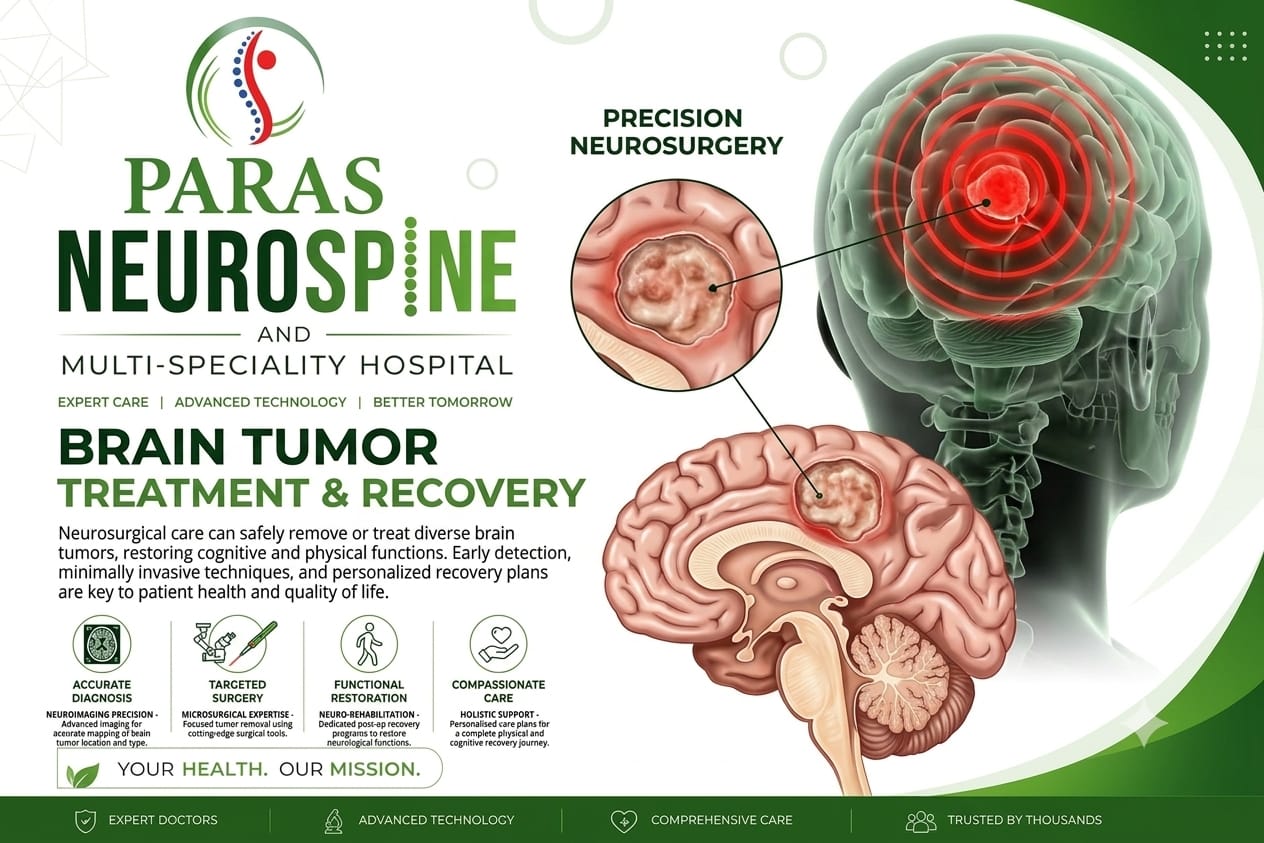
Brain tumor surgery is a big step, and most families feel as much worry about the weeks afterward as about the operation itself. How long will it take? Will things be the same? What can we do to help?
At Paras Neurospine and Multi-Speciality Hospital in Lucknow, these are the questions we hear most often. Here is what recovery usually looks like, so you know what lies ahead.
The first 24 to 72 hours: close monitoring
After surgery, most patients are watched closely in the ICU or a high-dependency unit. The team checks alertness, speech, movement, vision, and vital signs at regular intervals.
You may notice:
- Drowsiness from anaesthesia
- A headache around the surgical site
- Swelling of the face or eyelids, which looks dramatic but usually settles within days
- A dressing or bandage on the head
- A urinary catheter or IV lines for a short while
None of this is unusual. If something looks different from what you expected, ask the nurse or doctor. Nobody minds the question.
Hospital stay: usually 4 to 10 days
The stay depends on the type of tumor, the surgical approach, and how the patient is doing. Most people are up and walking with support within a day or two. Physiotherapy often starts early, because gentle movement helps the brain and body recover.
Before discharge, the team will review your medicines, wound care, diet, and warning signs. They should also tell you when to come back for review. The biopsy (histopathology) report usually arrives within the first week or so. It tells us exactly what type of tumor was removed and whether further treatment, such as radiotherapy, is needed.
The first few weeks at home
Recovery at home is gradual. Some days feel better than others, and that is normal.
Common things in weeks 1 to 6:
Recovery at home is gradual. Some days feel better than others, and that is normal.
- Fatigue. The brain uses a lot of energy to heal. Short rests during the day help.
- Headaches. These usually ease with prescribed medicines.
- Mood changes. Irritability, low mood, or tearfulness can follow brain surgery. It is the healing process, not weakness.
- Memory and concentration. You may feel foggy or forget small things for a while.
- Sleep disturbance. Steroids and anti-seizure medicines can affect sleep.
What helps:
- Take every medicine on time, especially antiseizure tablets if prescribed. Never stop them on your own.
- Eat simple, protein-rich meals and drink enough fluids.
- Walk a little every day. Start with a few minutes and build up.
- Keep the wound clean and dry, and follow the stitch or staple removal date.
- Avoid heavy lifting, bending, and straining until your surgeon says it is safe.
- Do not drive until the doctor clears you, particularly if you have had seizures.
When to call the hospital straight away
Contact your neurosurgeon or come to the emergency department if you notice any of these:
- A sudden severe headache or one that keeps worsening
- Repeated vomiting
- A seizure New weakness, numbness, or difficulty speaking
- Confusion or unusual sleepiness
- Fever, or redness, swelling, or discharge at the wound
- Clear fluid leaking from the nose, ear, or wound
Do not wait for the next appointment if something feels wrong.
Months 2 to 6: getting back to life
Most people begin returning to light daily activity within a few weeks, and many are back at work in two to three months. This varies with the tumor’s location, the type of work, and any further treatment.
Rehabilitation can make a real difference. Depending on your needs, it may include:
- Physiotherapy for strength and balance
- Speech therapy if language was affected
- Occupational therapy to rebuild daily skills
- Counselling for patient and family
Follow-up MRI scans are usually done at planned intervals, often at around three months, then at longer gaps. They confirm that the surgery has done its job and help us catch any change early.
Why recovery differs from person to person
Two patients with “brain tumors” can have completely different journeys. These factors matter:
- Tumor type and grade. Benign tumors such as meningiomas often have a smoother recovery than aggressive ones.
- Location. Tumors near areas controlling speech, movement, or vision may need more rehabilitation.
- Age and overall health. Fitness before surgery helps afterward.
- Surgical technique. Modern microsurgical and image-guided methods aim to protect healthy brain tissue.
- Support at home. Family involvement makes a real difference.
Why families choose Paras Neurospine for brain surgery care
A good recovery begins with a good surgery and continues with good follow-up care. At Paras Neurospine and Multi-Speciality Hospital, Lucknow, patients are treated under the care of Dr. Pramod Chaurasia, a neurosurgeon with over 20 years of experience and more than 6,000 surgeries behind him. Patients and families often speak warmly of him in their reviews, and his team stays with you from diagnosis through rehabilitation.
The hospital is NABH accredited and equipped with modern facilities for neurosurgical care. Just as important, the team takes the time to explain each stage in plain language, because informed families recover better together.
Frequently asked questions
- How long does it take to recover from brain tumor surgery?
Most people feel noticeably better within 4 to 6 weeks, and many resume normal activities within 2 to 3 months. Complete recovery can take longer, depending on the tumor and the person.
- Is it normal to feel tired for weeks after brain surgery?
Yes. Fatigue is the most common complaint and improves gradually with rest, nutrition, and gentle activity.
- When can I go back to work?
Often between 6 and 12 weeks for desk-based work, and later for physically demanding jobs. Your surgeon will advise based on your progress.
- Will I need radiotherapy or chemotherapy after surgery?
It depends on the biopsy result. Many benign tumors need only monitoring, while others need additional treatment.
- Can a brain tumor come back?
Some tumors can recur, which is why regular followup scans matter.
Book a consultation in Lucknow
If you or a loved one is facing brain tumor surgery, or already recovering and have worries, speak to a specialist early. Contact Paras Neurospine and Multi-Speciality Hospital, Lucknow to book a consultation with Dr. Pramod Chaurasia.