
Think about a young man who takes his tablets every night, never skips a dose, goes to bed on time. And still, once every couple of months, he collapses at work. His family has stopped letting him ride a bike. His marriage talks have gone quiet. Nobody says it out loud, but everyone is waiting for the next seizure.
This is more common than people think. And for some of these patients, there is a way out that nobody told them about: surgery.
When tablets stop being enough
Most people with epilepsy do fine on medicines. Seizures settle, life carries on. But about one in three patients keeps having seizures even after trying two or more well-chosen medicines at proper doses. Doctors call this drug-resistant epilepsy. If the third or fourth tablet is added and nothing changes, the chances of a new drug working drop quite a lot.
That’s usually the point where a neurosurgeon should be brought into the conversation.
Who can actually be helped?
Surgery works best when the seizures begin in one particular spot of the brain. A scar in the temporal lobe is a classic example. A small tumour, a cyst, a tangle of abnormal blood vessels or a patch of badly formed brain tissue can also be the source. If the spot can be found and removed safely, the seizures often stop, or become far less frequent.
If seizures start all over the brain at once, surgery is less likely to help, and your doctor will tell you that honestly.
The work-up comes first
People often expect to be wheeled into an operating theatre quickly. It doesn’t happen that way, and that’s a good thing. Before anyone talks about cutting anything, the team needs to be sure where the seizures come from.
You’ll have an MRI done with an epilepsy protocol, which looks at the brain more closely than a routine scan. You’ll likely stay for video-EEG monitoring, where you’re watched on camera while your brain waves are recorded, sometimes for several days. The idea is to catch a seizure as it happens. Memory and thinking tests follow, so the surgeon knows what needs protecting. If the picture is still unclear, a PET scan or other tests may be added.
It can feel slow. But this stage decides whether the operation succeeds, so it’s worth the patience.
What the surgery involves
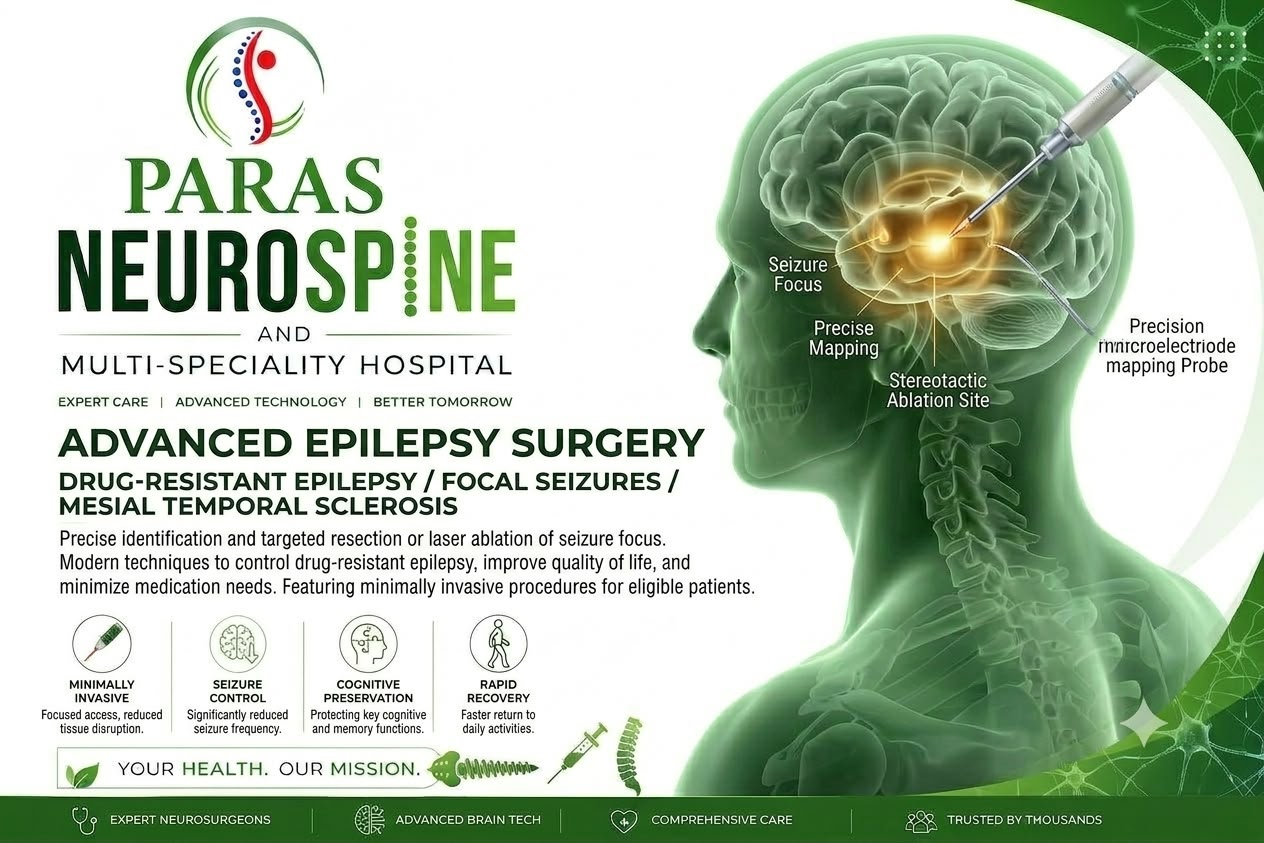
The most common operation removes the small area of brain that sets off the seizures. Temporal lobe surgery gets some of the best results in all of epilepsy care, and a good number of patients become seizure-free afterwards. If a tumour or cyst is the culprit, taking it out frequently settles the seizures too.
In certain cases, particularly some childhood epilepsies, the surgeon cuts the pathways that carry seizures from one side of the brain to the other. And when the trouble spot sits too close to speech or movement areas to be removed, a nerve stimulation device can sometimes reduce how often seizures happen, though it doesn’t usually cure them.
Let’s talk about the risks
Brain surgery is serious, and anyone who says otherwise isn’t being straight with you. Infection, bleeding, temporary weakness, changes in speech or memory, and the possibility that seizures don’t fully stop are all real. How likely each one is depends on the exact area involved.
What often gets missed is the other side of the scale. Uncontrolled seizures carry their own dangers: falls, burns, road accidents, drowning, and over the years, damage to memory and mood. For the right patient, living with those risks is worse than the operation.
After the operation
Most people spend several days in hospital. Headache and tiredness are normal at first. Over the next few weeks energy returns, and many go back to routine work within a month or so, though it varies from person to person.
Tablets usually continue for a while after surgery. Please don’t stop them on your own, even if you feel perfectly well. The doctor will lower the dose slowly, only when it’s safe.
Some things people still believe
Plenty of families think epilepsy is caused by a curse, an evil spirit or something the person did wrong. It isn’t. It’s a medical condition of the brain, and it can be treated.
Others say surgery is too risky to even consider. In carefully chosen patients, that’s simply not true. And some prefer to wait a few more years “to see if it settles”. Waiting does cost something, because years of uncontrolled seizures can affect learning, memory and confidence, especially in children.
Epilepsy surgery in Lucknow at Paras Neurospine
If your seizures haven’t settled despite regular treatment, a second opinion from a neurosurgeon is a sensible next step. It doesn’t commit you to anything.
Paras Neurospine and Multi-Speciality Hospital is NABH accredited and equipped with the latest facilities for brain and spine care. Dr. Pramod Chaurasia has more than 20 years of experience and has performed over 6,000 surgeries, with a 98% success rate in his treatment. Many patients describe him as “God” in their Google reviews, and you can see why when you read how families write about him.
At Paras Neurospine, you’ll get a proper evaluation, a straight answer on whether surgery can help in your case, and a team that stays with you and your family through the process.
Book a consultation with Dr. Pramod Chaurasia at Paras Neurospine and Multi-Speciality Hospital, Lucknow.
Frequently asked questions
Can epilepsy surgery cure epilepsy?
In well-selected patients, yes, seizures can stop completely. In others they reduce a lot. Results depend on the cause and where it sits in the brain.
When should surgery be considered?
Usually when two appropriate medicines have failed to control the seizures.
Is the surgery safe?
With careful selection and an experienced surgeon, it’s considered safe. No brain operation is completely free of risk.
Will I be awake during surgery?
Mostly no. General anaesthesia is used. In some cases near the speech area, the patient may be woken briefly so the surgeon can protect it.
Can children be operated on?
Yes, in selected cases. Early surgery may protect a child’s development and learning.
Where can I get epilepsy surgery in Lucknow?
Paras Neurospine and Multi-Speciality Hospital, under Dr. Pramod Chaurasia.