Minimally Invasive Spine Surgery in Lucknow: What Patients Should Actually Know
September 9, 2026
Most people who type “spine surgery” into Google aren’t looking for a textbook definition. They’re lying awake with pain shooting down one leg. Or three different doctors have already said surgery might be needed. They just want to know what it actually looks like. Before agreeing to anything.
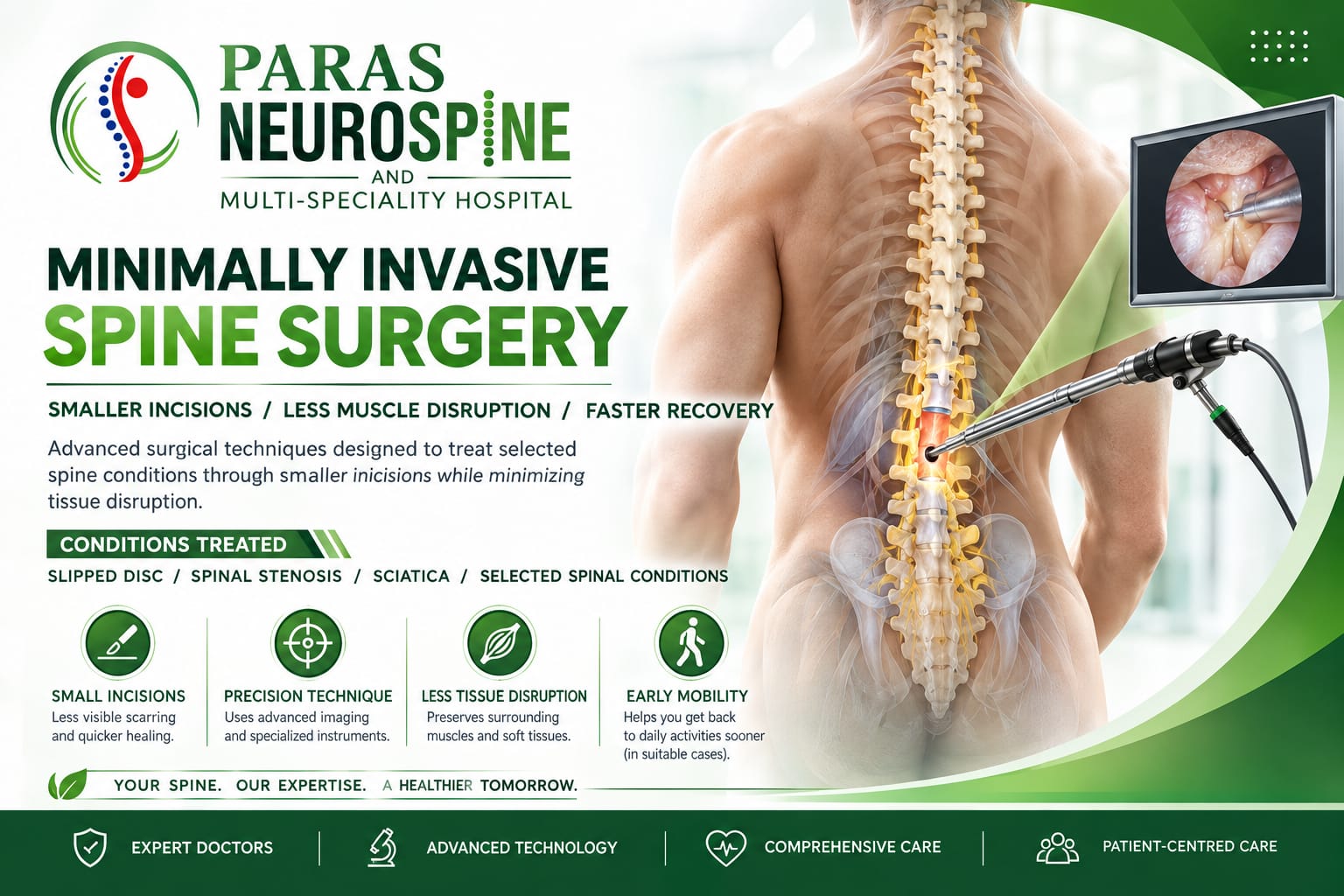
Minimally invasive spine surgery, or MISS, treats problems like a herniated disc or spinal stenosis. Very small incisions. Not one large cut. Surgeons at Paras Neuro-Spine & Multi-Speciality Hospital in Lucknow use it often now. Patients tend to recover faster. They go home sooner too, compared with open surgery.
What actually makes it “minimally invasive”?
Open spine surgery cuts through a fair amount of muscle to reach the spine. It works. But it also meansmore bleeding. More pain afterwards. A longer stay in hospital. Minimally invasive spine surgery takes a different route. The surgeon uses a small tube or retractor. Sometimes no wider than a finger. It gently pushes the muscle aside. It doesn’t cut through it. A tiny camera or microscope shows the team what they’re working on. The actual repair happens through that narrow opening. Removing a disc fragment. Freeing a pinched nerve. Stabilizing a vertebra. It isn’t a different surgery in terms of what gets fixed. It’s a different way of getting there.
Conditions this approach can treat
Doctors at Paras Neuro-Spine & Multi-Speciality Hospital use this technique often. Herniated or slipped discs. Spinal stenosis. Sciatica from nerve compression. Degenerative disc disease. Spondylolisthesis. Sometimes a spinal fracture or a smaller tumor too. Not every case fits, though. Your surgeon needs to see your MRI or CT scan first. And examine you in person. Only then can they recommend this route over a traditional one.
Why patients tend to prefer it
Ask anyone who’s had both an open surgery and a minimally invasive one. The difference is usually obvious pretty fast. Incisions are smaller. Often under an inch. Blood loss is lower too. The muscle gets moved aside, not cut. That means less soreness afterward. A smaller wound. Lower infection risk. Most people go home in one to three days. Quite a few are walking the same day as surgery. Some the next morning. No surgery is risk-free, though. Recovery speed depends on the person. There condition, age and general health. How well they stick to physiotherapy afterward matters too.
What actually happens, step by step
First, an evaluation. A physical exam. MRI or CT imaging. This confirms whether a minimally invasive approach fits your case. The surgery itself takes one to a few hours. Depends what’s being done. General or regional anesthesia, usually. Afterward, patients are often up and moving within hours. Not days. Most are discharged in two or threedays. From there, light activity resumes over the next week or two. Most people feel close to normal somewhere between four and six weeks. Physiotherapy helps get there.
Why patients in Lucknow choose Paras Neuro-Spine
Paras Neuro-Spine & Multi-Speciality Hospital is built for brain and spine care. Led by senior neurosurgeon Dr. Pramod Chaurasia. It’s built around neurosurgical and spine cases specifically. But it also sits inside a multi-speciality setup. Anesthesia, critical care, and other departments are close by if needed. For spine surgery, that backup matters. Patients keep coming back for a few reasons. A neurosurgical team focused specifically on brain and spine conditions. Modern imaging. Minimally invasive equipment. Structured pre- and post-op care. Physiotherapy included. The hospital is empanelled under Ayushman Bharat, PM-JAY, for patients who qualify. It’s also easy to reach from most parts of Lucknow. Close to SGPGI.
Questions patients usually ask before surgery
Is it actually safe?
For good candidates, yes. Complication rates run lower than open surgery. Less blood loss. Less tissue damage. Individual risk still depends on your condition and history. Your surgeon can walk you through your specific case.
How soon until I’m back to normal?
Walking, usually within a day. Light activity, one to two weeks. Full recovery, four to six weeks or so. Varies by procedure. Varies by person too.
Am I even a candidate for this?
If medication, physiotherapy, or injections haven’t worked for a herniated disc or sciatica, maybe. An MRI and a proper checkup will tell your surgeon for sure.
Does Ayushman Bharat cover it?
Paras Neuro-Spine is empanelled under PM-JAY. Eligible patients can use it. Exact coverage depends on the procedure. Worth checking with the billing team before your appointment.
If back pain has been running your life
There’s a point where physiotherapy and painkillers stop being enough. Most people know when they’ve hit it. If that’s you, talk to a spine specialist at Paras Neuro-Spine & Multi-Speciality Hospital, Lucknow. Surgery or not, it’s a reasonable next step.