
When a doctor says the words “spinal fusion,” most people go quiet for a second. It sounds big, and honestly, it is a serious operation. But it’s also one of the most established procedures in spine surgery, and for the right patient it can finally end years of back pain, leg pain, or numbness that nothing else touched.
This guide walks through what spinal fusion actually is, who needs it, what happens on the day, and what the months after look like. If you’re searching for a spinal fusion surgeon in Lucknow, it will also help you know what to ask before you decide. No jargon wall, just straight answers.
What is spinal fusion?
Your spine is a stack of small bones called vertebrae, cushioned by discs and held together by joints. When one of those levels becomes unstable or painfully worn, it moves in ways it shouldn’t and pinches the nerves nearby.
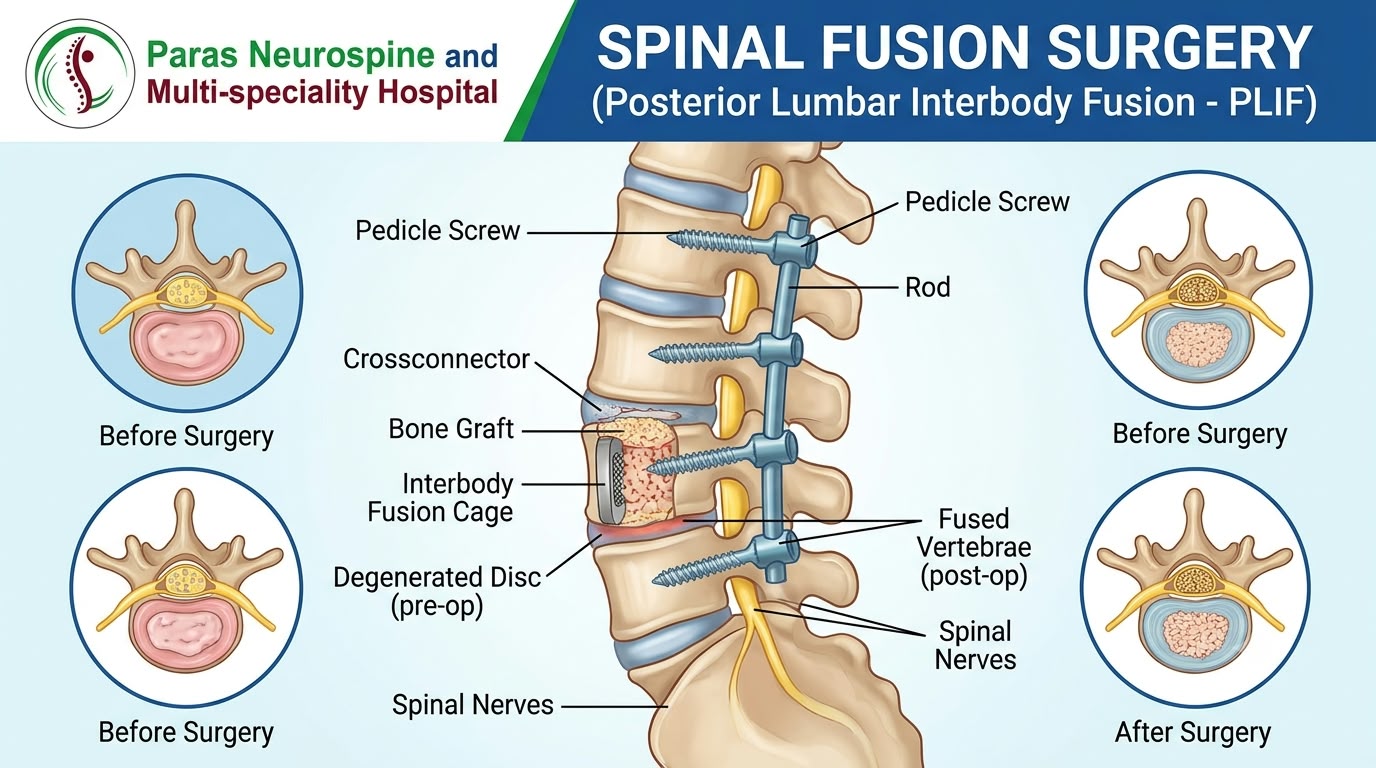
Spinal fusion joins two or more vertebrae so they heal into a single solid piece of bone. The surgeon places a bone graft (your own bone, donor bone, or a synthetic substitute) between the vertebrae. Titanium screws and rods usually hold everything still while the bone grows. Once it has fused, that segment can’t move or grind anymore, and the pain it was causing settles down.
When do doctors recommend it?
Fusion is almost never the first step. Most patients have already tried medication, physiotherapy, posture correction, and sometimes injections for several months. Surgery comes into the picture when those haven’t worked, or when there’s a risk to the nerves. Common reasons include:
- Spondylolisthesis: one vertebra slips forward over the one below it
- Degenerative disc disease: a disc that has worn down and keeps causing pain
- Spinal stenosis: narrowing of the spinal canal along with instability
- Spinal deformity: abnormal curves such as scoliosis
- Fractures and other damage: when a vertebra is broken or damaged by infection or a tumor
A good surgeon will tell you honestly if you don’t need fusion. Sometimes a smaller procedure, like removing a slipped disc, is enough.
How is the surgery done?
The operation happens under general anesthesia, so you’re asleep throughout. Depending on the problem, the surgeon reaches the spine from the back, the front (common in the neck), or the side. The steps are broadly the same:
- The damaged disc or bone that’s pressing on a nerve is removed, which frees the nerve.
- A graft or a small spacer (called a cage) goes into the gap to restore height and encourage bone growth.
- Screws and rods are fixed in place to keep the segment steady while it heals.
Where it’s suitable, minimally invasive techniques can be used. These need smaller cuts, disturb less muscle, cause less blood loss, and often mean an earlier return to walking. Not every spine can be treated this way, and your surgeon will explain which route fits you. The operation itself usually takes a few hours, depending on how many levels are involved.
What does recovery look like?
Recovery is gradual, and patience matters more than anything else. Here’s a rough picture, though every patient heals at their own pace:
- Hospital stay: You’ll usually be on your feet with support within a day or two, and most people go home after a few days.
- First six weeks: Short, gentle walks every day. No bending, twisting, or lifting anything heavy.
- Weeks six to twelve: Guided physiotherapy begins to rebuild core and back strength. Many desk workers return to work around this time.
- Three months onward: The bone takes about three to six months to fuse, sometimes longer. Heavier activity is added step by step once your surgeon is happy with the healing.
Two things make a real difference. Quit smoking before and after surgery, because nicotine slows bone healing badly. And don’t skip physiotherapy, even on days you feel great.
Results and risks, honestly
Most patients notice less leg pain and easier walking, and many sleep better within weeks. Back pain improves too, though full relief can take several months as the bone fuses.
Like any major surgery, fusion carries risks: infection, bleeding, nerve irritation, or a graft that doesn’t heal properly. Over the long term, the levels next to a fused segment can take on extra strain. Careful patient selection, precise technique, and good aftercare keep these risks low, which is why choosing the right spinal fusion surgeon in Lucknow matters so much.
Spinal Fusion Surgeon in Lucknow: Dr. Pramod Chaurasia
At Paras Neurospine and Multi-Speciality Hospital, spine surgery is led by Dr. Pramod Chaurasia, a trusted spinal fusion surgeon in Lucknow and neurosurgeon with over 20 years of experience and more than 6,000 surgeries behind him. He reports a 98% success rate in his treatment, and the hospital is NABH accredited, with modern equipment to support safe, precise surgery.
What patients mention most, though, is how he treats them. Many Google reviews describe him with deep gratitude, and some call him “God.” He takes time to explain whether surgery is truly necessary and, if it is, exactly what to expect before, during, and after.
Frequently asked questions
- Is spinal fusion painful?
You’ll have soreness around the incision for the first few weeks, but it’s managed with medication. Most patients say the nerve pain they came in with eases quickly.
- Will I lose flexibility after fusion?
Only slightly. Fusing one or two levels barely changes everyday movement, because the rest of your spine continues to bend normally.
- How long does it take to fully recover?
Most people return to daily routines within six to twelve weeks. Complete bone fusion takes three to six months, sometimes more.
- Can I avoid fusion surgery?
Sometimes, yes. If your pain responds to physiotherapy or a smaller procedure, you may never need fusion. A proper examination and MRI will tell you.
Book a consultation
If back or leg pain has been controlling your days, don’t wait until it gets worse. Consult Dr. Pramod Chaurasia, spinal fusion surgeon in Lucknow, at Paras Neurospine and Multi-Speciality Hospital for a clear diagnosis and an honest opinion on your options.