
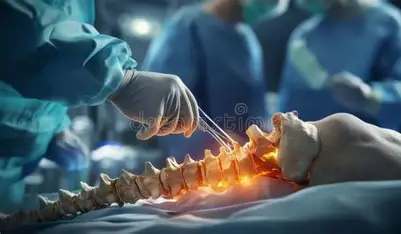
If persistent neck or back pain affects your daily life and makes you wonder whether you should have spine surgery, the good news is that new technologies have created safer, more effective options for spine-related surgeries to treat a range of situations.
We will describe spine-related issues and the surgeries that can remedy them. We will also set your expectations for what occurs at the various stages of surgery and offer a few of many options for the best spinal surgeon to meet your specific needs.
What Is Spine Surgery?
Surgeries that treat issues related to the spinal column, the spinal cord, and spinal nerves are called spine surgeries. Your doctor may recommend spine surgery after unsuccessful attempts to treat your pain with medication or physical therapy, and/or limitations to your activities. Several conditions are candidates for surgical intervention. Some of the more common are:
Common conditions treated include:
- Herniated (slipped) disc
- Spinal stenosis
- Spine fractures
- Scoliosis
- Spine tumors
- Degenerative spine disease
Nowadays, spinal surgery is much easier and even less painful. It results in smaller, cosmetically better scars and a quicker recovery from the operation.
| Need Relief from Back Pain?Early treatment can prevent permanent nerve damage.
Book Your Spine Consultation! |
When Is Spine Surgery Needed?
As with any surgical procedure, Spine Surgery is generally not considered until all other forms of treatment have been exhausted. That being said, there are a number of conditions of the spine that require surgery in order to relieve symptoms caused by compression of the spinal cord and/or nerves, or by instability of the spine.
Common signs include:
- Persistent back or neck pain of several weeks’ duration or more, especially if severe, recurrent, or limiting normal activities (e.g., walking, sitting, lifting).
- Numbness or weakness in the arms or legs, which may indicate that a nerve is being irritated or compressed.
- Difficulty walking or instability while walking. This could be caused by the compression of the spinal cord or nerves that are responsible for walking and balance.
- Loss of control of bladder or bowel functions – this is a serious condition that requires treatment as an emergency, as it may be caused by a serious compression of nerves that control these functions.
- Is nerve compression affecting you? Your Spine doctor can identify this from your MRI images. Nerve compression can be caused by a variety of things, including a herniated disk, bone spur, spine tumor, or other abnormal growth that is pressing on your nerves.
- Spinal instability or fractures. When the spine is unstable, it cannot support its normal functions and generally requires surgical correction.
How Should You Prepare for Spine Surgery?
Prepare yourself for your operation. The better you prepare for your surgery, the smoother your recovery will be.
Before surgery, you may need to:
- Undergo MRI, CT scan, or blood tests
- Review medications with your surgeon
- Stop smoking if advised
- Follow fasting instructions
- Arrange assistance at home after discharge
Preparation of the body and mind for your spine surgery will enable you to deal best with the challenges of your recovery.
What Are the Risks and Benefits of Spine Surgery?
Benefits
- Long-term pain relief: Relieving chronic back pain and/or neck pain for the long term by decompressing nerves which have been pinched.
- Mobility: As you can see from the above image after Spinal Surgery you can easily go for a walk, bend or even sit comfortably and can carry out your daily activities without any pain or discomfort.
- Relieve nerve compression: Relieve symptoms of numbness, tingling and weakness in your arms and legs.
- Better quality of life: Relief from chronic pain will enable you to sleep, return to work and all activities and have better quality of life.
Risks
- Infection: A rare but treatable infection in the area where the surgery took place.
- Bleeding: As with any surgery, there will be some form of bleeding post operatively. This can be an excessive amount, but is rare.
- Blood clots: Risk of blood clots in legs after back surgery can be significantly reduced by early return to activity.
- Nerve injury: This is an uncommon risk, however it can be a temporary or permanent condition.
- Delayed recovery: There is a chance that patients may need more time to recover from an operation, depending on other health issues that they may have.
Choosing the right surgeon for your spine treatment can minimize risks of complications.
| Looking for Expert Spine Care?
Get personalized treatment from experienced neurosurgeons. Schedule an Appointment |
How Long Does Spine Surgery Recovery Take?
How long does it take to recover from spine surgery? The amount of time a person needs to recover from a spine operation depends upon a number of factors, including the extent of the procedure.
Most patients can expect:
- Patients are able to walk within 24–48 hours of minimally invasive spinal surgery.
- Return to desk work in 2–6 weeks
- A full recovery to take place within a few months for major spine surgeries.
- Physiotherapy to improve strength and flexibility
Follow the tips given to recover well from the Spine Surgery.
Why Choose Paras Neurospine And Multi-speciality Hospital for Spine Surgery?
When it comes to Neurosurgical care, it is very important to search for the Best neurosurgical hospital and the most competent neurosurgeon to treat you. It is also very important to get a complete diagnosis and then modern treatment under the care of an experienced Neurosurgeon.
Our team of experienced staff and the best neurosurgical hospital in India is headed by Dr. Pramod Chaurasiya (MBBS, MCh), a neurosurgeon with 20+ years of experience in Brain and Spine Surgeries.
The best neurosurgical hospital in India for all Spine and Brain cases is Paras Neurospine And Multispeciality Hospital, where complete diagnosis is followed by modern and best treatment under the hands of Dr. Pramod Chaurasiya (MBBS, MCh).
Conclusion
In short, spine surgery is the only solution to some of the chronic spinal disorders to enable the patient to get back to comfort and mobility. It is very important for the patient to know when he needs to go for surgery, what the various procedures are, and how long it would take to get back to normal.
At Paras Neurosurgical Hospital, Spine Care is provided by Dr. Pramod Chaurasiya (MBBS, MCh) – one of the best neurosurgical hospitals in India. With over 20 years of experience in brain and spine surgery, Dr. Pramod Chaurasiya is now treating cases of Spine Surgery at Paras Neurosurgical Hospital. For more information on Spine Surgery and to schedule an appointment with Dr. Pramod Chaurasiya, please visit Parasneurospine.in.
FAQs
- When is spine surgery performed?
A severe case of back or neck pain, nerve damage, or spine instability that does not respond to other treatment options may necessitate the performance of spine surgery.
- Is surgery on the spine safe?
Yes. Risks associated with surgery are minimal when the patient is operated on by an experienced neurosurgeon and recent methods are employed.
- How long does it take to recover from surgery on the spine?
The recovery period from surgery on the spine is different for the different types of surgeries and may take several weeks to a few months before normal activities can be resumed.
- What is meant by minimally invasive spine surgery?
This is a modern technique to perform surgery on the spine where the smallest possible incisions are made to treat all spinal conditions. The outcome of this technique is the least amount of pain, the least number of scars, and the fastest return to normal daily activities.
- Who should I see for surgery on the spine?
To get the best treatment for spinal problems, you should see a qualified and preferably experienced neurosurgeon. An experienced neurosurgeon with more than 20 years of practice is Dr. Pramod Chaurasiya (MBBS, MCh).