
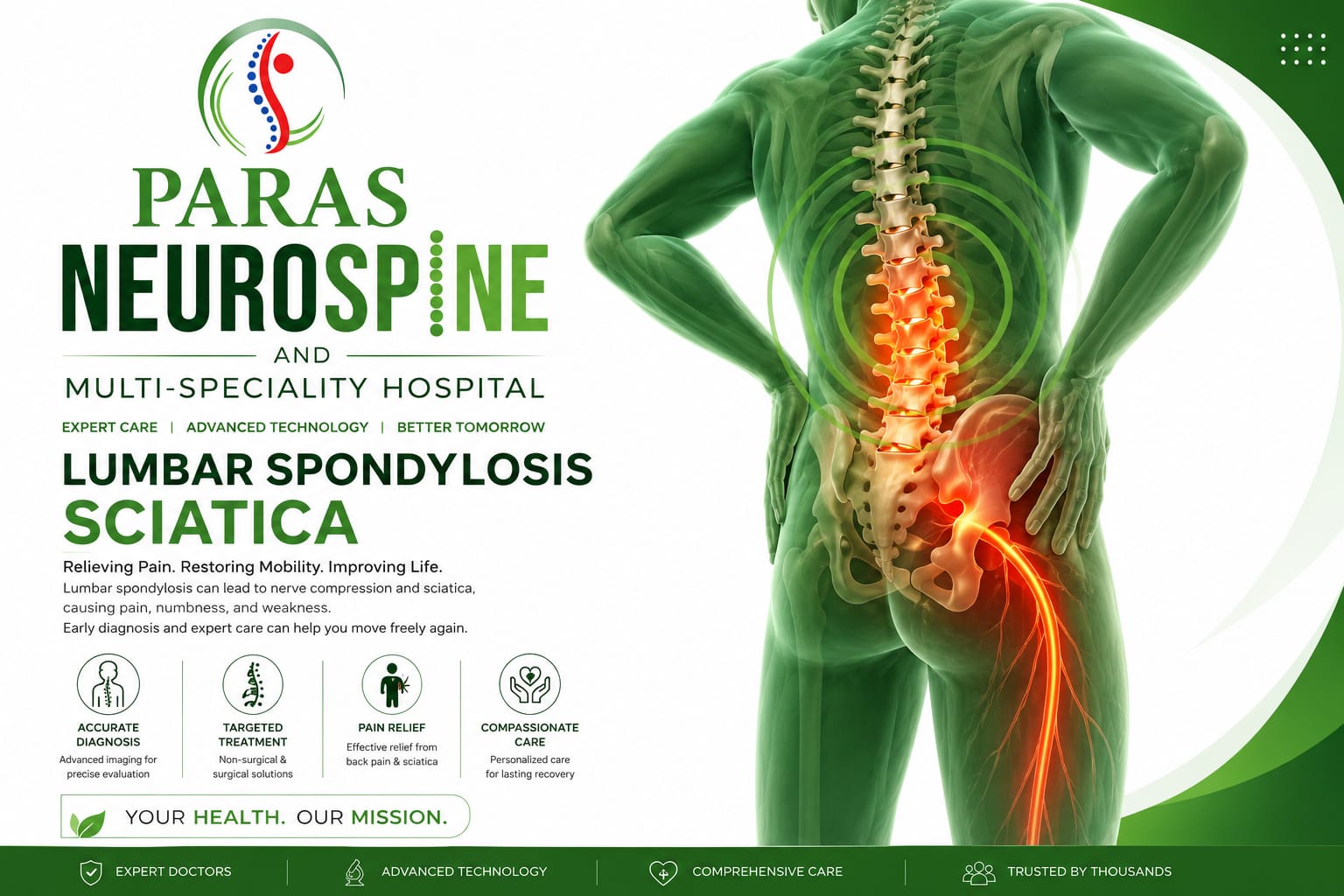
Lumbar Spondylosis, also known as sciatica, is a condition that affects the discs located in the spine. Lumbar Spondylosis (Sciatica) refers to the disease that affects the lumbar discs of the spine.
Lumbar spondylosis is a common condition affecting the lower back due to the ageing process. It can lead to lower back pain, stiffness, and often to a form of pain known as “sciatica,” which occurs when the nerves in the lower back are irritated or compressed. Knowing what to watch for and how it has to be treated can enable you to gain early control over the condition.
What Is Lumbar Spondylosis?
Lumbar spondylosis is the result of a gradual deterioration of the bones, discs, and joints of the lower back. This can cause a lack of flexibility, bone spurs, or pressure on the surrounding nerves.
If the nerve is compressed, pain can shoot up the leg from the lower back to the buttock or thigh or leg. This type of pain, which stems from the nerves, is often referred to as “sciatica”.
What Are the Symptoms of Lumbar Spondylosis?
The signs and symptoms of lumbar spondylosis vary:
Symptoms of lumbar spondylosis are often:
- Lower back pain: Might be mild or continuous and can intensify after sitting for extended periods, standing, or exercise.
- Back stiffness: This stiffness is usually more marked when sitting up after being abed or sitting for prolonged periods in the same position.
- Sciatica pain: There is pain arising from a spinal nerve which may be sharp or burning and spread from the lower back to the leg.
- Numbness or tingling: Pins and needles in the buttocks, legs, or feet.
- Weakness in the leg or foot: If there is a lot of compression on the nerves, you may develop weakness in the leg or foot.
The exact cause of lumbar spondylosis is not yet known.
Lumbar spondylosis is primarily caused by the ageing causes of wear and tear in the back. But things like poor posture, sitting and sitting for too long, old or previous back injuries, lifting so often, stress, excess weight, lack of exercise and back degeneration can raise the risk.
How Is Lumbar Spondylosis Diagnosed?
Treatment will depend on how bad the symptoms are and how much pressure is on the nerve.
- If appropriate, reduce weight and correct your posture. Things you should not do – Avoid things that worsen your back pain.
- Physiotherapy: To improve your movement, relax and loosen up the spinal area, and to make the supporting muscles in fine form to decrease pressure on your spine.
- Advised medications for pain relief and anti-inflammatories are provided by your doctor when needed.
- Non-surgical treatments: Other conditions can be used to treat remaining symptoms, depending on the class of disorder.
- The final option is spinal surgery for when the serious strain on the nerve still causes pain, weakness, or other neurological signs.
When to visit a spine expert?
Do not ignore constant back pain that radiates into the leg or is accompanied by numbness or weakness. Assessing a patient early on can be helpful in making the diagnosis and treatment of the condition.
Right now, some of the brain and spine ailments can be well managed in Lucknow with a doc accessible at a multidisciplinary hospital like Paras Neuro-Spine & Multi-Specialty Hospital. About Dr. Pramod Chaurasia (MBBS, MCh), Brain and Spine Care doctor
Why Choose Paras Neuro-Spine & Multi-Speciality Hospital?
When searching for the Best neurosurgical hospital or the Best neurosurgical hospital in India, it is important to choose a consistently performing hospital that has extensive experience in managing spinal disorders and experts in this field.
Dr. Pramod Chaurasia (MBBS, MCh, 20+ years of experience) is a Brain, spine, and nervous system-related treatment specialist doctor.
Spinal strain can also be prevented with regular weight management, exercise, good sitting habits, proper lifting techniques, and preventing long periods of inactivity from sitting or lying.
| Don’t Ignore Persistent Back Pain
Consult an expert spine specialist for your lumbar spondylosis and sciatica, evaluated here by a senior orthopedic surgeon. [Book a Consultation] |
Conclusion
Lumbar spondylosis and sciatica arising from it can hinder one to extricate themselves to everyday life and reduce the quality of life, but if diagnosed and managed effectively, they have the potential to reduce symptoms. See your doctor for ongoing back pain, leg pain, or weakness, numbness.
For the best treatment for brain and spine in Lucknow, visit Paras Neuro-Spine & Multi-Speciality Hospital.
FAQs
- Is lumbar spondylosis the same as sciatica?
Symptoms: No, lumbar spondylosis is a degenerative disease process that occurs in the spine, and sciatica is pain triggered by irritation of the sciatic nerve or its roots or compression.
- Can lumbar spondylosis be treated without surgery?
Yes. It’s a very common disease, and patients may utilize an array of treatments to treat the symptoms, such as making changes in their lifestyles, physiotherapy, medications, or other non-surgical methods the patient’s doctor may recommend.
- When does lumbar spondylosis require surgery?
Surgery may be recommended in cases of severe, prolonged symptoms or significant muscle weakness, or if non-operative treatment has not provided sufficient relief.
- Why should I consult Dr. Pramod Chaurasia for lumbar spondylosis?
With 20+ years of brain and spine care experience, Dr. Pramod Chaurasia (MBBS, MCh) has immense knowledge and can examine your condition and suggest to you the best cure for you.
- How can I contact Dr. Pramod Chaurasia?
For details, contact Dr Pramod Chaurasia (+91-9467820334).