
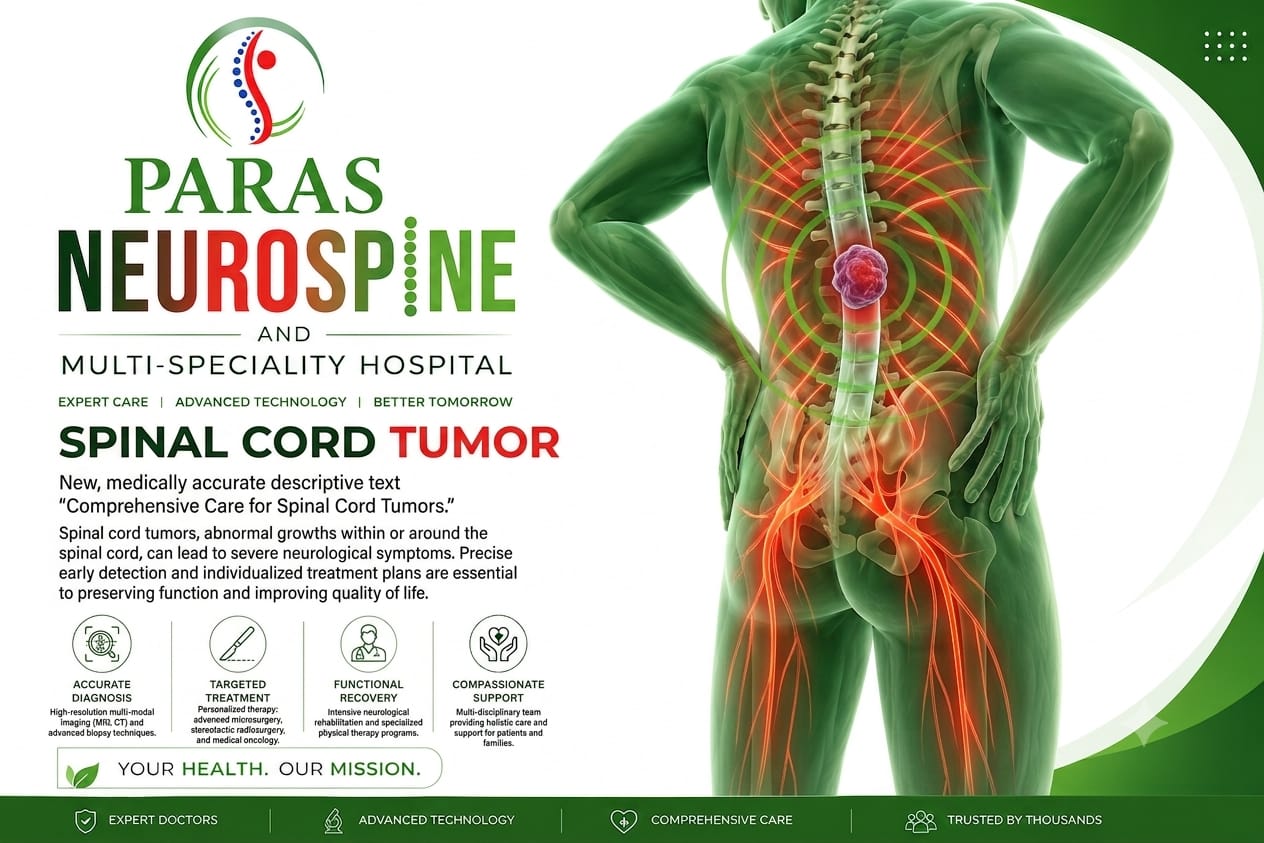
So what exactly is a spinal cord tumor? At its simplest, it’s an abnormal growth of cells in or around the spinal cord and the bones that protect it. Cancerous, sometimes. Benign, more often than you’d think. Either way, the tumor doesn’t need to be malignant to cause trouble — once it starts pressing on nerve tissue, it can interfere with how the body sends signals to the arms, legs, bladder, and bowel.
Here’s the reassuring part, though. Caught early and treated with the right surgical approach, most spinal cord tumors respond well to treatment. Neurological function can often be preserved. Sometimes it even comes back.
Types of Spinal Cord Tumors
Where exactly a tumor sits relative to the spinal cord says a lot about how difficult surgery will be. Doctors generally sort these tumors into three groups based on location.
Intramedullary tumors grow inside the spinal cord itself. Think ependymomas and astrocytomas. Because they’re embedded in the cord’s own tissue, these tend to be the most delicate ones to operate on.
Then you’ve got intradural-extramedullary tumors, which form in the meninges, the thin covering around the cord, without invading the cord itself. Meningiomas and schwannomas are the most familiar names here, and surgery tends to go well for these.
Extradural tumors sit a layer further out, between the meninges and the vertebrae. Here’s something that surprises a lot of people: most extradural tumors didn’t originate in the spine at all. They spread there from cancer elsewhere in the body, often the lungs, breast, or prostate.
Location matters just as much as type, honestly. Whether a tumor shows up in the neck (cervical), mid-back (thoracic), lower back (lumbar), or tailbone (sacral) tends to shape which symptom appears first. One more thing worth knowing: tumors that actually originate in the spine, called primary spinal tumors, are the less common story. Most spinal tumors are visitors, not locals.
Common Symptoms
Spinal tumors are quiet at first. They don’t announce themselves. Back or neck pain usually shows up first, often worse at night or while lying down, and that’s a detail people tend to explain away. A bad mattress, maybe. Too much time at a desk.
But as the tumor grows and starts crowding the cord or nearby nerves, more symptoms tend to follow. Numbness or tingling down an arm or leg. Muscle weakness. Coordination that isn’t quite what it used to be. Some people say they don’t know exactly where their feet are when they’re walking. Others notice they can’t feel heat, or a sharp pinch, the way they once could. In more advanced cases, bladder or bowel habits change too.
None of that is unique to spinal tumors, and that’s really the whole problem. Disc issues, nerve compression, plenty of other spine conditions can look almost identical from the outside. Which is exactly why symptoms that stick around, or get worse, deserve a proper neurological workup, not a guess, and definitely not a wait-and-see approach.
What Causes Spinal Cord Tumors
Most people who get this diagnosis have no family history of it and nothing they can point to as a cause. That’s just the reality. A smaller number of cases are linked to inherited conditions like neurofibromatosis or tuberous sclerosis, and a weakened immune system does seem to raise the risk somewhat. There’s no blood test, no screening scan, nothing that reliably picks these tumors up early, which puts a lot of weight on noticing symptoms yourself, and actually acting on them.
How Doctors Diagnose a Spinal Cord Tumor
An MRI with contrast is usually where this starts. It shows exactly where a tumor sits and how far it’s spread. For tumors growing inside the cord, many surgeons will also order a diffusion tensor imaging (DTI) scan before surgery. DTI traces the nerve fiber pathways running through the cord itself, so the surgical team can see how the tumor has distorted that internal wiring before they even pick up a scalpel.
Treatment Options
Surgery remains the backbone of treatment for most spinal cord tumors. That part hasn’t changed much. What has changed, quite a lot actually, is how surgeons get there.
Microsurgical resection is now the go-to for intramedullary tumors: high magnification, a steady hand, and tools like ultrasonic aspirators that shrink the tumor down safely from within. Even when a tumor sits deep inside the cord, surgeons can often manage substantial removal this way.
If one thing has made this kind of surgery safer than it used to be, it’s intraoperative neuromonitoring. By tracking motor and sensory evoked potentials as the operation unfolds, the surgical team gets an early signal the moment the cord shows signs of stress. That means they can adjust course before damage happens, instead of finding out afterward.
Minimally invasive surgery has become a real option for many intradural-extramedullary tumors too, meningiomas and schwannomas especially. Smaller, muscle-sparing incisions can still achieve high rates of complete removal, just with quicker recovery and a shorter hospital stay than traditional open surgery.
Radiotherapy usually comes into the picture when a tumor can’t be fully removed, when it’s malignant, or if it comes back later. On its own, it’s rarely the whole plan, more of a backup than a first choice.
When to See a Neurosurgeon
Back pain that doesn’t ease up with rest. Pain that wakes you at night. New numbness, weakness, or coordination trouble showing up alongside it. If any of that sounds familiar, it’s worth getting checked rather than waiting to see if it passes on its own.
Spinal cord tumors aren’t common. But they belong to that small group of conditions where getting treated early genuinely changes the outcome, both how much of the tumor can be removed, and how much function can be saved along the way.
At Paras Neuro-Spine & Multi-Speciality Hospital, the neurosurgery team combines microsurgical technique with intraoperative neuromonitoring, bringing in minimally invasive approaches wherever they fit. The goal, always, is preserving function and quality of life, not just clearing the tumor.
That kind of precision doesn’t come from books. It comes from years spent at the operating table. At Paras Neuro-Spine & Multi-Speciality Hospital, this work is led by Dr. Pramod Chaurasia, Founder, Director, and Senior Consultant at the hospital’s Institute of Neurosciences. He completed his M.Ch in Neurosurgery at the G.B. Pant Institute of Postgraduate Medical Education and Research (GIPMER), New Delhi, following an MS in General Surgery from G.S.V.M. Medical College, Kanpur. Today, his practice spans brain tumor surgery, cerebellopontine angle tumors, spine trauma, and complex spinal cord tumor surgery.
Frequently Asked Questions
Is a spinal cord tumor the same as a brain tumor?
Not quite, though they’re closely related. Both fall under tumors of the central nervous system, but they form in different places, and even the same tumor type can behave differently depending on where it ends up.
Are most spinal cord tumors cancerous?
Not necessarily, and that tends to surprise people. Meningiomas and schwannomas, two of the more common primary spinal tumors, are usually benign. It’s the tumors that spread to the spine from cancer elsewhere in the body that are more often malignant.
Can a spinal cord tumor be removed completely?
That depends on the type and where it’s located. Intradural-extramedullary tumors are often removed in full. Intramedullary tumors are trickier, since they’re woven directly into the cord, but substantial removal is still possible for many patients.
How long does recovery take after spinal tumor surgery?
There’s no single answer. It depends on tumor type, size, and how much neurological deficit existed before surgery. Some patients go home within a few days after a minimally invasive procedure. Others need weeks of rehab to rebuild strength and coordination.
Does spinal cord tumor surgery always carry a risk of paralysis?
There’s always some risk, given how close this surgery happens to the spinal cord. That’s precisely why intraoperative neuromonitoring exists: to catch warning signs early and keep that risk as low as it can possibly be.
If unexplained back pain, weakness, or numbness has been sticking around for you or someone in your family, it might be worth booking a consultation with Dr. Pramod Chaurasia at Paras Neuro-Spine & Multi-Speciality Hospital, Lucknow. An early evaluation gives you the clearest picture of what’s actually going on, and the best shot at getting the treatment plan right from the start.