
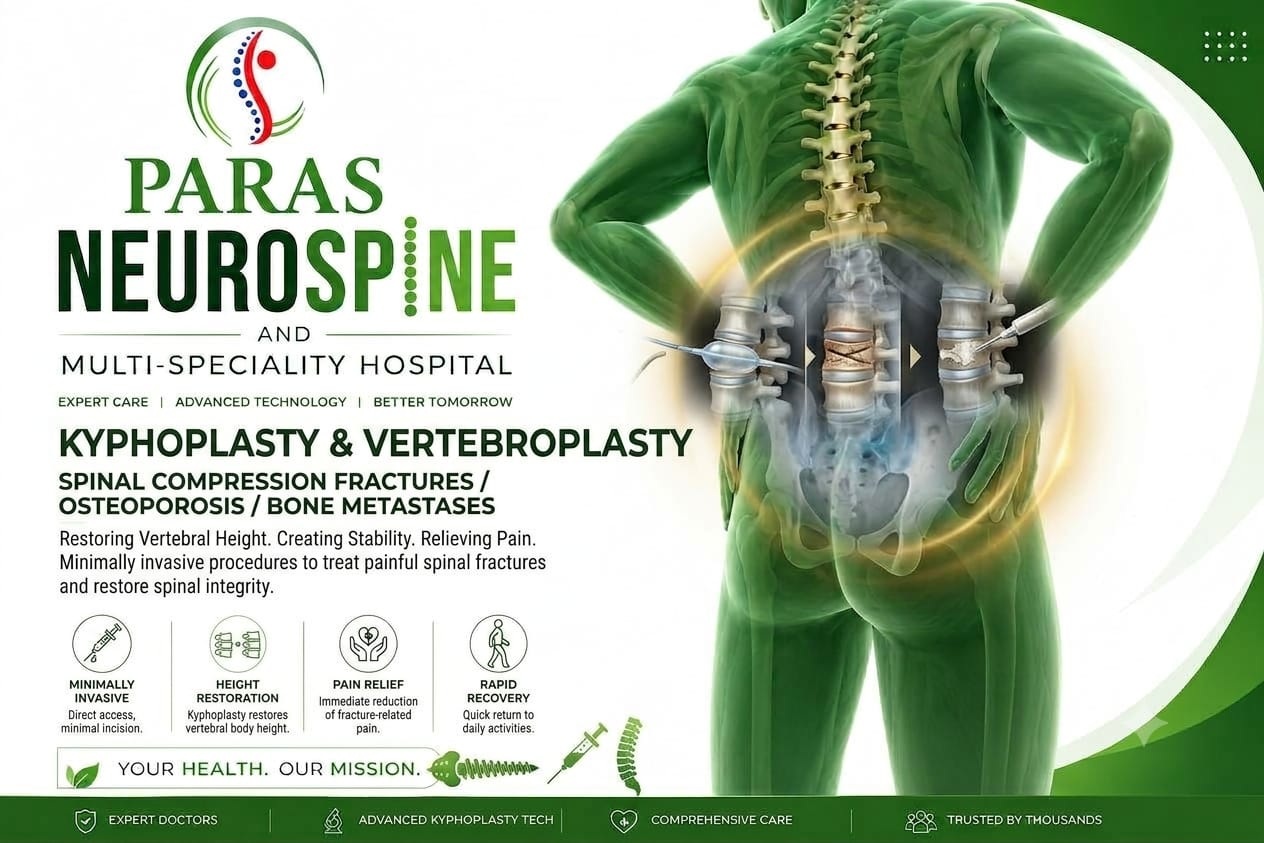
Kyphoplasty and vertebroplasty are short, minimally invasive procedures for painful spinal fractures. The surgeon passes a thin needle into the broken vertebra, guided by live X-ray, and fills it with medical-grade bone cement. In kyphoplasty, a small balloon opens up space first. If you want a surgeon for this in Lucknow, Dr. Pramod Chaurasia at Paras Neurospine and Multi-Speciality Hospital on Raebareli Road treats these fractures.
Dr. Pramod Chaurasia and Paras Neurospine at a Glance
- Surgeon: Pramod Chaurasia, Senior Consultant Neurosurgeon and Director
- Experience: over 20 years in neurosurgery and more than 6,000 surgeries
- Hospital: Paras Neurospine and Multi-Speciality Hospital, NABH accredited
- Procedures: kyphoplasty, vertebroplasty and the full range of spine surgery under one roof
- Approach: a proper examination first. Surgery only when it will actually help you
- Location: Raebareli Road, Lucknow, Uttar Pradesh
What Happens When a Vertebra Breaks
Your spine is a stack of small bones called vertebrae. Now and then one gives way. A fall can do it, but when bones are weak, a hard cough or lifting a bucket of water is enough.
Osteoporosis is the usual reason, mostly in women after menopause and in older adults. Tumours such as myeloma or a haemangioma, and injuries, account for the rest.
The pain tends to arrive suddenly and sits in the middle or lower back. Standing and walking make it worse, and lying down eases it. Over time, some people lose height or start to stoop.
Vertebroplasty vs Kyphoplasty
Same goal, slightly different route. Both steady the broken bone so it stops hurting.
Vertebroplasty. The surgeon injects bone cement straight into the fractured vertebra. It hardens within minutes and works like an internal cast.
Kyphoplasty. A small balloon goes in first and is inflated gently. That makes a pocket and, in some patients, wins back a little of the lost height. The balloon comes out, then the cement goes in.
Which one fits you depends on how the bone has collapsed, how recent the fracture is and what your MRI shows. Your surgeon decides that after seeing the scans, not before.
Who Needs It?
This may be the right option if:
- A recent compression fracture shows on your MRI or X-ray and matches where it hurts
- Rest, painkillers and a back brace haven’t helped enough
- The pain keeps you from walking, sleeping or managing at home
- The cause is osteoporosis or a tumour such as myeloma or a haemangioma
It isn’t suitable if there’s an active infection, a bleeding problem that can’t be corrected, or a piece of bone pressing on the spinal cord or nerves. Those cases need a different plan, which is why the examination and scans come first.
How the Procedure Goes
Most people expect something bigger than it is.
- You get local anaesthesia with sedation, or general anaesthesia in some cases.
- You lie face down while the back is cleaned and numbed.
- A thin needle goes into the broken vertebra through a tiny cut. Live X-ray (fluoroscopy) shows the surgeon exactly where it is.
- For kyphoplasty, the balloon is inflated first. Then the cement goes in.
- The cement sets within minutes, and a small dressing covers the spot.
One level usually takes under an hour. Many patients go home the same day or the next morning.
Recovery
Many people feel real relief within a day or two, and some are walking soon after. The needle site can stay sore for a few days. That’s normal.
A few things help:
- Walk a little each day, as your surgeon advises
- Skip heavy lifting and sudden twisting until you’re told it’s fine
- Keep up your osteoporosis treatment. The cement mends one bone, while calcium, vitamin D and bone-strengthening medicines protect the rest
- Turn up for follow-up visits
Risks
In experienced hands these procedures are considered safe, but no surgery is risk-free. Cement can leak outside the vertebra, there’s a small chance of infection or bleeding, a neighbouring vertebra can fracture later, and nerve irritation happens rarely. Good imaging and careful technique keep these risks down. A good surgeon will go through them with you before you agree to anything.
Why Dr. Chaurasia and Paras Neurospine Are a Strong Choice for Kyphoplasty in Lucknow
The vertebra sits a few millimetres from the spinal cord, so experience and precision count here more than almost anywhere in surgery. This is what patients get at Paras:
- A surgeon with a track record. Pramod Chaurasia has over 20 years in neurosurgery and has performed more than 6,000 surgeries.
- Independent accreditation. The hospital is NABH accredited, so its safety and care standards are checked by an outside body.
- Imaging-guided accuracy. Advanced equipment helps place the cement exactly where it’s needed.
- One team for the whole spine. Diagnosis, non-surgical care, minimally invasive procedures and complex spine surgery are all in the same hospital. If your fracture needs more than cement, you don’t have to start over somewhere else.
- Straight advice. If a brace, medicines or physiotherapy can do the job, that’s what you’ll be told.
- Patient feedback. In Google reviews, patients often describe Dr. Chaurasia as a doctor who listens and takes the time to explain.
Paras serves patients in Lucknow and across Uttar Pradesh.
Frequently Asked Questions
Who is a good kyphoplasty surgeon in Lucknow?
Look for a neurosurgeon or spine surgeon who does these procedures regularly, works in an accredited hospital with live X-ray imaging, and explains the risks plainly. Dr. Pramod Chaurasia at Paras Neurospine and Multi-Speciality Hospital fits that description, with over 20 years of experience and more than 6,000 surgeries.
Is kyphoplasty painful?
The area is numbed and you’re sedated, so the procedure itself is comfortable. Some soreness afterwards is common and settles in a few days.
How long is recovery after vertebroplasty?
Many patients are back to light daily activity within a few days. Your surgeon will tell you when lifting and heavier work are safe.
Kyphoplasty or vertebroplasty, which is better?
Neither wins for everyone. It depends on your fracture, your scans and what you need from the treatment. Your surgeon will recommend one.
Can the cement shift or come out?
Once it sets, it stays fixed in the bone. The rare problem is leakage during the injection, which is why imaging guidance is used throughout.
Does insurance cover it?
Many health plans cover these procedures when they’re medically needed. It’s worth checking your policy terms before admission.
Is it safe for older patients?
Often, yes. Because it’s minimally invasive, it’s commonly done in older people who couldn’t handle major surgery. Fitness is assessed case by case.
Don’t Sit on a Back Fracture
Sharp back pain that won’t ease with rest deserves a proper look, especially after 50 or if you have osteoporosis. Treating it early can mean fewer days in bed and a quicker return to normal life.
Get urgent help if back pain comes with leg weakness, numbness, or loss of control over your bladder or bowels.
Book a Consultation
Dr. Pramod Chaurasia Senior Consultant Neurosurgeon & Director Paras Neurospine and Multi-Speciality Hospital Raebareli Road, Lucknow 📞 +91 8957051954 | +91 9467820334
This article is for general information and does not replace a medical consultation. Treatment depends on individual evaluation.